A Conversation with Joey - Part 2
Science, Spirit, and the Medical Journey
Meet Dr. Joey - Part 2
What makes ketamine/spravato different from other tools available in psychiatry? What does it offer that other approaches can’t?
For some people, ketamine and/or Spravato opens up neuroplasticity, genuinely new ways of thinking, new neurotransmitter activity. I’ve worked with SSRIs and SNRIs for a long time, and when they’re good, they’re good. But when they’re not, it’s hard to ask someone to try ten of them just to land on a maybe.
What’s kept my attention is the improvement I’m seeing in patients with KAP and Spravato relief that can show up in days, not weeks.
Spravato (esketamine) is something relatively few practices in Montana offer. How did Inner Journey come to offer it, and who benefits most from it?
Spravato came out of the same leap of faith that started Inner Journey. After a year of training in how to integrate psychedelics into medical practice, I was ready to build something new with Donna, our team, and Spravato (nasal esketamine) fit right into that vision. It's FDA-approved for treatment-resistant depression, and honestly, bringing it to Missoula meant wading through a lot of insurance, prior authorizations, and "failing upward" before it worked.
Who benefits most? The person who has done the work and still hasn't found enough relief. Picture someone who has tried three different antidepressants over a few years. They’ve been faithful about it: taken the meds as prescribed, added therapy, waited out the six-week windows, pushed through the side effects. And they are still dragging, still gray, still wondering if this is just how it's going to be. They are not "failing" at treatment; the standard tools just haven't reached them. That's exactly who Spravato is designed for.
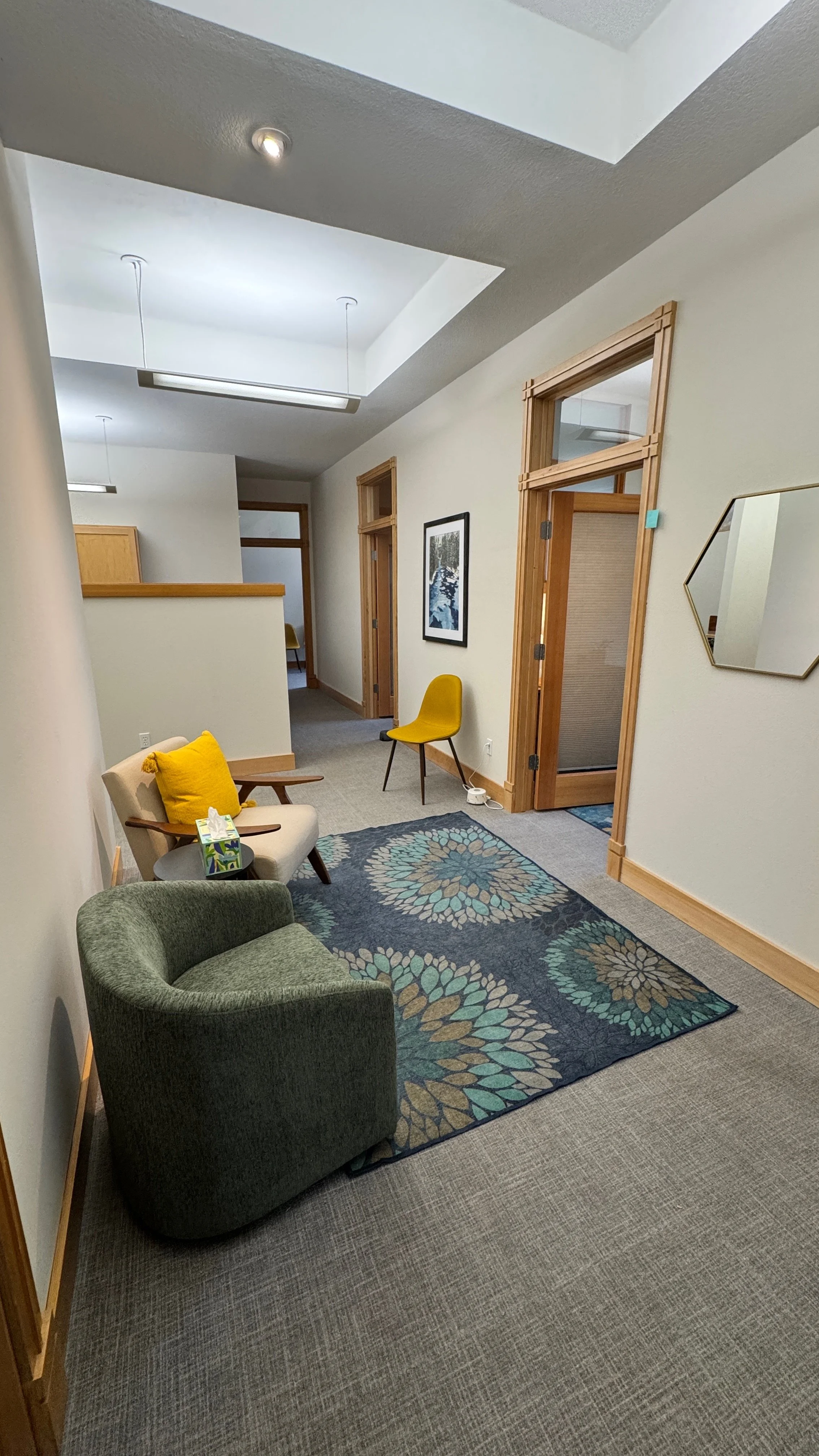
For someone like them, what draws me in is that relief often comes in days, not weeks, with higher remission and response rates than traditional antidepressants and fewer long-term side effects. We give it as a nasal spray in a calm, welcoming room, with supervision and support, and we wrap our own simple integration around it: a little meditation, a body scan, some gratitude, so you leave with language for the shift you felt and something real to bring to your therapy session.
It isn't magic, and it isn't for everyone. But for the person who's tried and tried and still can't see over the next hill, Spravato can open a door that felt shut. And maybe that little rocket ship on the box is the right image after all.
What do patients most commonly misunderstand about ketamine or Spravato before they begin? What do you find yourself explaining over and over?
So much of my early conversation with a new patient is gently clearing away myths. Some people hear ‘ketamine’ and think street drug. Some think it’s a passing fad. Some assume it’s only for rich people. Some think it’s outright illegal. None of those are the reality of what we do but I understand why they’re in the air, and I’d rather talk them through than pretend they aren’t there.
You offer Primary Care Consulting at Inner Journey, which is different from a traditional primary care practice. Can you explain what that service is and who it’s designed for?
This is different from traditional primary care. I consult, and I give you a full hour. I’m genuinely okay earning less for that I have the privilege of being financially stable enough right now to prioritize it, and I find a lot more joy at this pace.
I offer second opinions and help translate what another provider may have been thinking; there are usually many valid ways to treat the same thing. And I have deep respect for the physicians who only get twenty minutes with you they are the life force of the American medical system, and I want to support them. So part of my job is teaching you to advocate for yourself quickly and clearly, so that you and your provider both get to the outcome you want in the time you’ve got.
Inner Journey was among the first practices in Missoula to offer KAP. What was it like to bring something that new to this community? What surprised you about how people responded?
I love inventing new ways of doing things. It’s hard and it can be so much fun. I learned that all over again opening this practice in my late fifties: brain-stretching, humbling, occasionally silly (I once led my very best calm, guru-like meditation, only to have my own phone start blaring halfway through).
There were plenty of moments of “can I really do this am I an imposter?” Turns out ‘failing upward’ is a real way of life, especially with insurance and prior authorizations. But bringing something genuinely new to this community has been worth every bit of it.
What do you want someone in Missoula who has never considered ketamine therapy, or who is a little skeptical of it, to know about what you do and why it matters?
If you’re skeptical, I get it and here’s what I want you to know. It’s safe, and it’s not as expensive as people assume. Integration is central to how we do this, and preparation and setting make an enormous difference. It’s also not as woo-woo, or as clinical, as you might picture — we weave both together, with you at the center.
We’re seeing patients feel better, more often than not. And for the people who feel it didn’t quite meet their hopes, we don’t disappear, we stay, with other options, with therapy, and by setting new goals together. Peace, Dr. Joey