Mental Health Support in Missoula, MT: What to Know Before You Start
Most people who reach out for mental health support are not in crisis. They are living reasonably functional lives and still feeling like something essential is missing. The ability to be fully present with the people they love. The ease that used to come naturally in situations that now feel effortful. The sense of actually being in their life, rather than managing it from a step removed.
Mental health struggles narrow life gradually and quietly. And when they have been present long enough, it can be easy to mistake the narrowed version for the real one.
You don’t have to justify why you’re here. You don’t need a dramatic reason, and you don’t have to have it figured out. The only qualification for getting support is that something is getting in the way of the life you want.
Mental Health Care in Missoula Has Expanded
The options available in Missoula have grown significantly in recent years. A decade ago, choices here were largely limited to individual therapists and a handful of prescribers. Today, practices in the area offer a wider range of services — from traditional psychotherapy and medication management to evidence-based treatments like EMDR and Ketamine-Assisted Psychotherapy (KAP).
That is genuinely good news. It means more people can find care that fits their specific situation rather than settling for whatever happens to be available. But it also means the initial search can feel more overwhelming.
Knowing roughly what kind of support you are looking for can help you narrow it down.
What Kind of Support Are You Looking For?
You do not need a diagnosis before you start. You do not need to be certain something is wrong, or to have the right words for it, or to be suffering enough that it feels justified. If something is getting in the way of the life you want — in relationships, in work, in the simple experience of a day — that is enough.
Psychotherapy and talk therapy are often the starting point for people who want to work through patterns in thinking, relationships, grief, anxiety, or daily stress. Missoula has individual therapists, licensed counselors, and practices — like Inner Journey — that offer multiple modalities in one place.
Psychiatric care and medication management is the right call if you are wondering whether medication should be part of your treatment, or if you are already on something and want a more comprehensive evaluation. Look for a psychiatric provider or an integrated practice that combines therapy and prescribing.
Specialized treatments like Spravato (esketamine) and Ketamine-Assisted Psychotherapy (KAP) are worth knowing about if you have tried standard approaches and have not found the relief you were hoping for. Both have clinical evidence for treatment-resistant depression and PTSD, and are available at Inner Journey in Missoula.
On the permission to start: There is a persistent, false belief that the bar for getting support is suffering badly enough. People who are functioning — holding down a job, caring for others, appearing fine from the outside — tell themselves they don’t qualify. They do. The life you are living is not the ceiling of what is possible. And you do not have to perform the right level of crisis in order to deserve help finding your way toward something better.
What to Look for in a Missoula Mental Health Provider
Not every practice is the same, and fit matters — clinically and personally. A few things worth considering as you search:
Credentials and specialization. Licensed therapists in Montana hold designations like LCSW (Licensed Clinical Social Worker) or LCPC (Clinical ProfessionalCounselor). Psychiatrists and psychiatric nurse practitioners can prescribe medication. If you have a specific concern — trauma, treatment-resistant depression, grief — look for providers who list it as an area of focus.
Integrated care. Some practices offer coordinated care across disciplines — for example, a prescribing provider and a therapist working together on your treatment. This coordination is especially valuable if your needs are complex, or if you are considering a treatment like KAP or Spravato, which work best alongside therapeutic support.
Access and insurance. Missoula providers vary in what they accept. At Inner Journey Healthcare, we are in-network with BCBS of Montana, Allegiance, PacificSource, First Choice Health Network, Aetna, Missoula County Employee Benefits, Mountain Health Co-op, and Medicaid. We believe access to care should not depend on the right plan or the ability to pay out of pocket. If you are unsure about your coverage, we can verify your benefits before your first appointment.
Location and logistics. If you are attending regular appointments, practical details matter more than they might seem. Is the in-office location accessible? How does the practice handle scheduling and communication between visits?
What Happens When You Reach Out
At most practices — including ours — the first step is an intake appointment. This is not just administrative. It is a chance for the provider to understand your history, your goals, and what has brought you to this point. It is also a chance for you to ask questions and get a sense of whether the fit feels right.
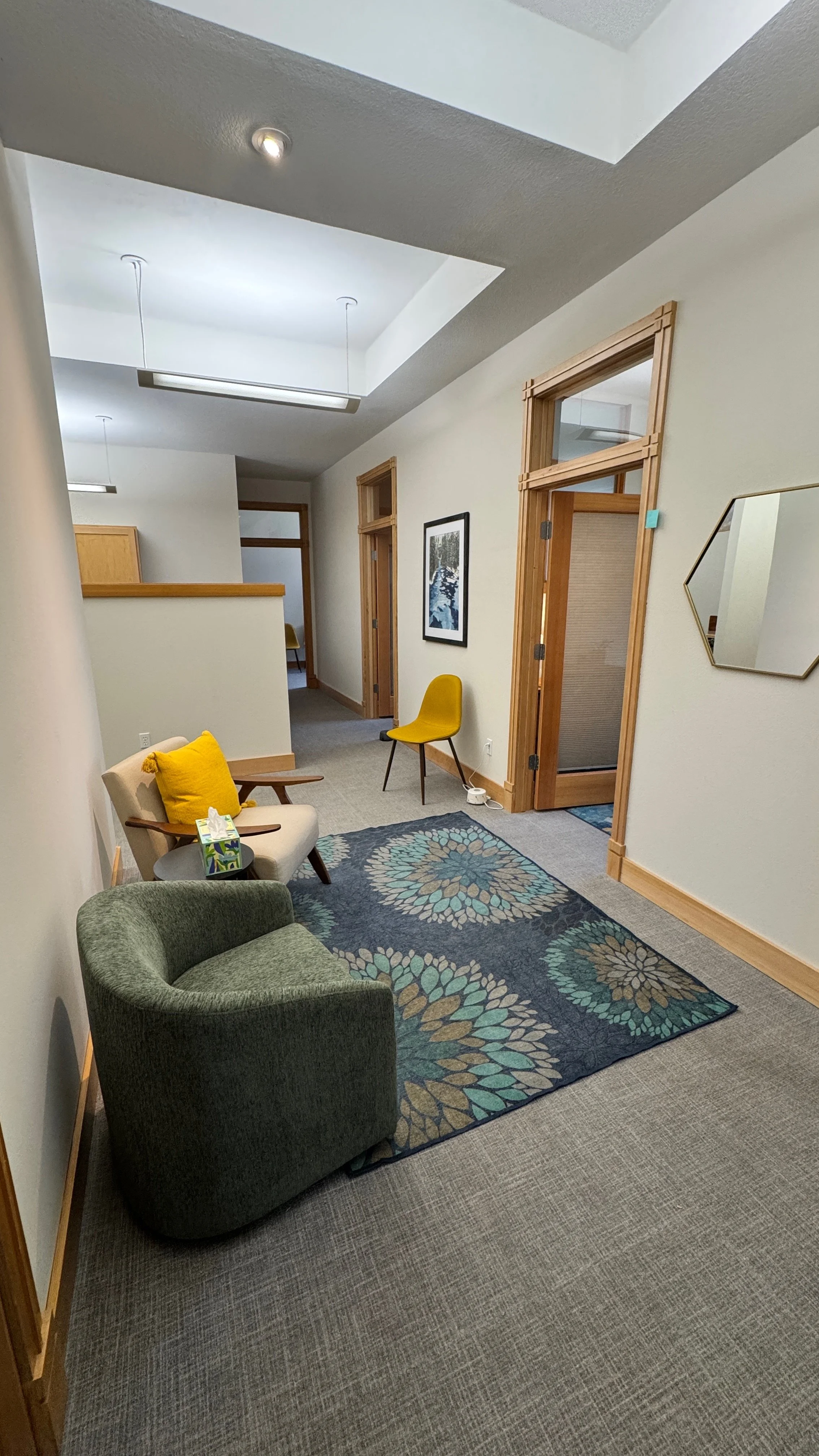
At Inner Journey Healthcare, we offer an in-office experience designed to feel clear and unhurried. Intake appointments include a clinical conversation about your history, a discussion of your goals, and a collaborative look at what treatment might make sense for you. You do not need to have everything figured out before that first conversation. That is part of what the intake is for.
If you are in crisis:
Please contact the Montana Crisis Line (call or text 988) or go to your nearest emergency room rather than waiting for a scheduled appointment. If your situation is serious but not an acute emergency, reaching out sooner gives you more flexibility — many people wait until they are in crisis, and then the urgency makes it harder to be thoughtful about where to start.
We’re Here When You’re Ready
Inner Journey Healthcare is located at 121 Hickory St, Suite 4, in Missoula. We offer psychotherapy, EMDR, CBT-I, ACT and specialized treatments including KAP and Spravato — all within a coordinated, in-office model designed to meet you where you are.
The life you want is not on the other side of figuring out whether you deserve help. It is on the other side of asking for it. If you have questions about whether our services are a good fit for what you are navigating, we are glad to talk.